Marine Corps University Foundation Launches Inaugural Advisory Council for Innovation, AI and Emerging Technology
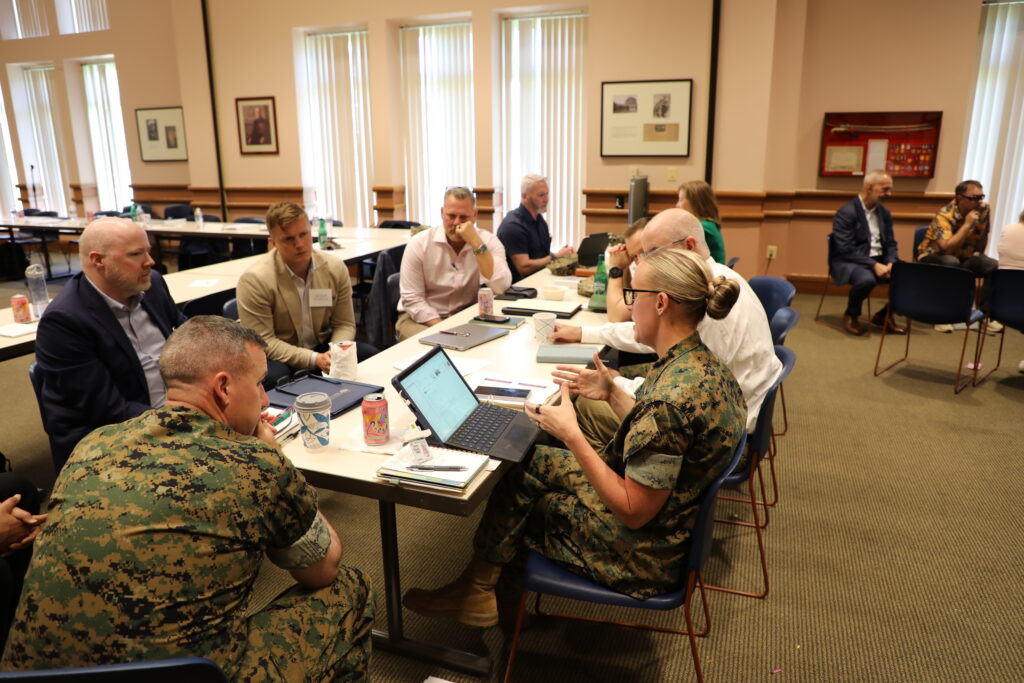
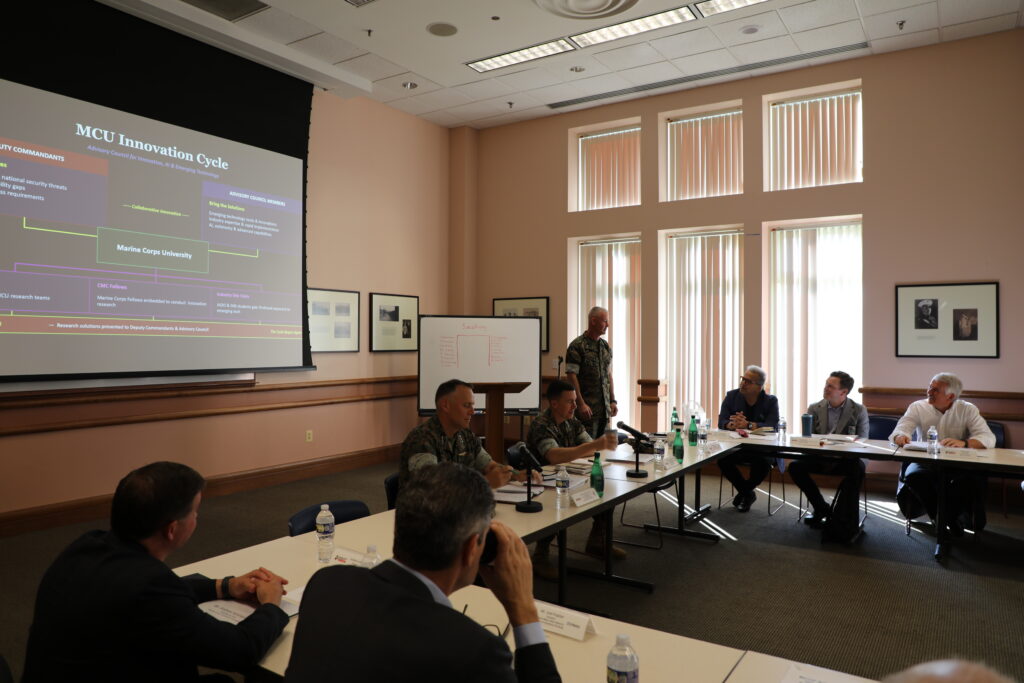
On June 11-12, Marine Corps University Foundation convened its inaugural Advisory Council for Innovation, AI and Emerging Technology at Marine Corps University in Quantico, Virginia, bringing together distinguished leaders from industry, academia, defense, and technology to explore the opportunities and challenges shaping the future operating environment.
The goal of the advisory council meeting was to frame MCU’s 2026 priorities, including the Revolution in Military Education, the International Wargaming Center, and the Joint All-Domain Operations (JADO) program, and engage council members in a strategic dialogue on the opportunities and challenges ahead. Through collaboration, the council explored the integration of artificial intelligence, JADO concepts, and emerging technologies into professional military education. The insights helped identify partnership pathways for Academic Year 2027, including research collaborations, site partnerships, JADO master’s program proof-of-concept opportunities, and Krulak Center wargaming integration.
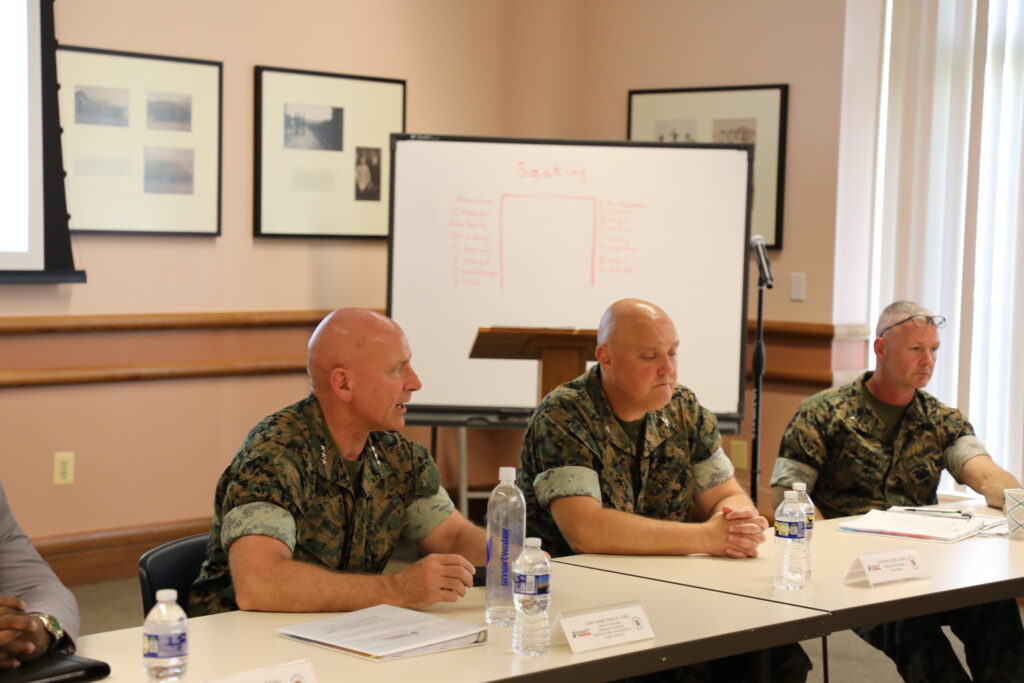
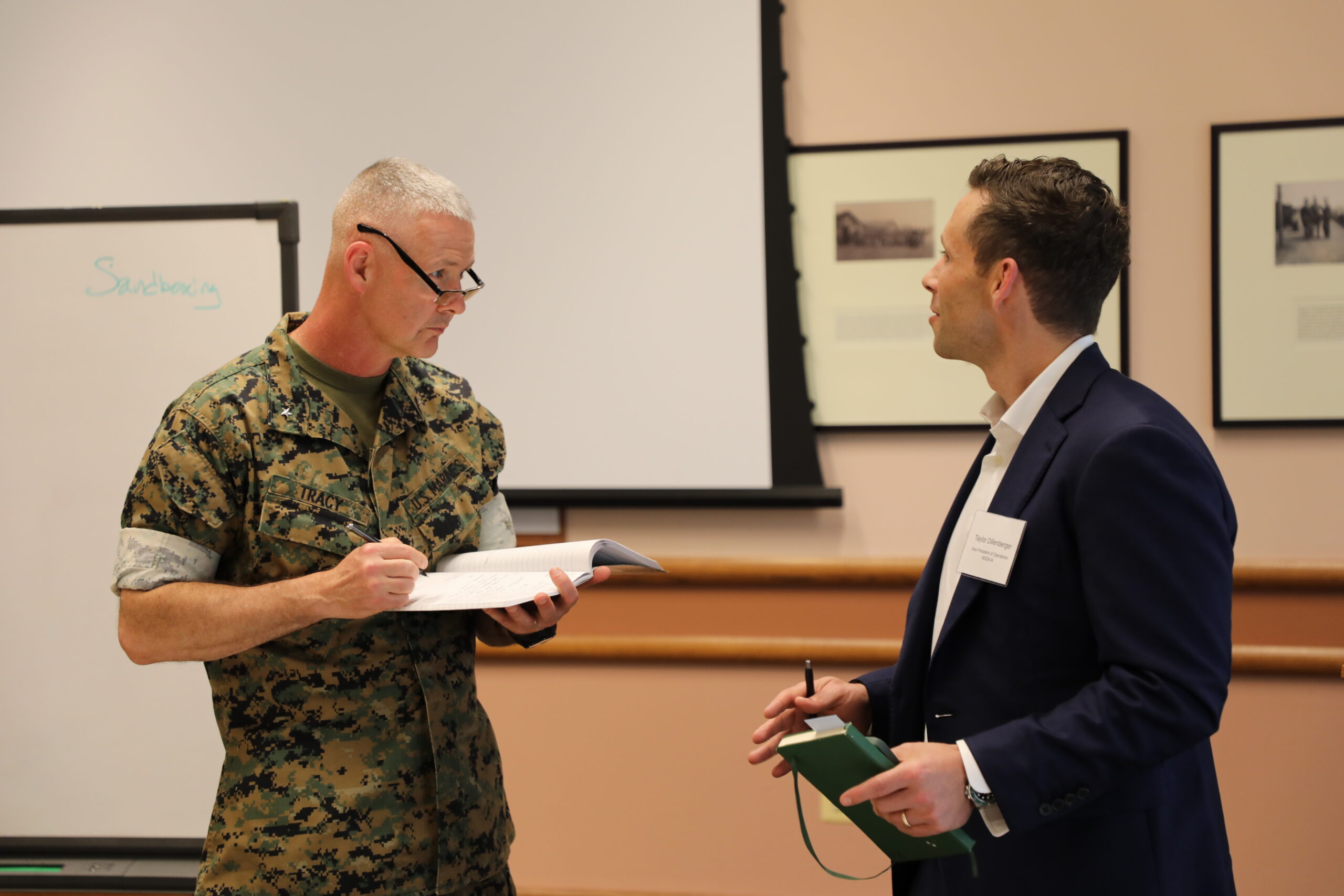
The inaugural session opened with welcoming remarks from Marine Corps University President and Commanding General, Brigadier General Matthew Tracy, who emphasized the importance of fostering collaboration between the Marine Corps University and industry as the service adapts to an increasingly complex technological landscape. Throughout the first day, council members engaged in candid dialogue, exchanging perspectives on technological disruption, strategic competition, talent development, and the evolving relationship between human decision-making and machine-enabled capabilities.
A highlight of the day was a presentation by Lieutenant General Matos III, Deputy Commandant for Information, who provided attendees with insights into the rapidly evolving information, cyber, and space domains. His remarks underscored the growing importance of these interconnected operational environments and the imperative for Marines to understand and leverage emerging capabilities in future conflicts.
Following the first day’s program, participants received a tour of the National Museum of the Marine Corps, and attended an evening reception that fostered further collaboration and relationship-building among attendees.
The Council reconvened on Friday morning for a full day of continued discussion and strategic planning. Attendees received additional senior leader perspectives from Lieutenant General Benjamin Watson, Commanding General of Training and Education Command (TECOM), and Lieutenant General Eric Austin, the Commanding General of Marine Corps Combat Development Command whose remarks helped frame the opportunities and challenges facing the Corps as it prepares for the future fight.
Later, discussions focused on the role of wargaming in military education, experimentation, and decision-making. These conversations explored how emerging technologies, artificial intelligence, and innovative methodologies can enhance the Marine Corps’ ability to test concepts, inform strategy, and develop future leaders.
By the conclusion of the program, participants had helped establish the foundation for an enduring partnership between Marine Corps University, Marine Corps University Foundation, and leaders across the innovation community. The Council represented a significant milestone for the Foundation, creating a forum where expertise from across sectors can inform the future of professional military education and support the development of Marines equipped to meet the demands of tomorrow's battlespace.
The event concluded with closing remarks from Brigadier General Tracy, who reflected on the value of the discussions, the strength of the partnerships forged during the two-day gathering, and the importance of sustaining momentum as the Advisory Council continues to shape conversations around innovation, artificial intelligence, and emerging technology in service to the Corps and the nation.
This initial meeting developed council-endorsed priority efforts and actionable next steps that will inform AY27 planning and support the FY27 MCU initiatives package. The council plans to convene again in the fall.